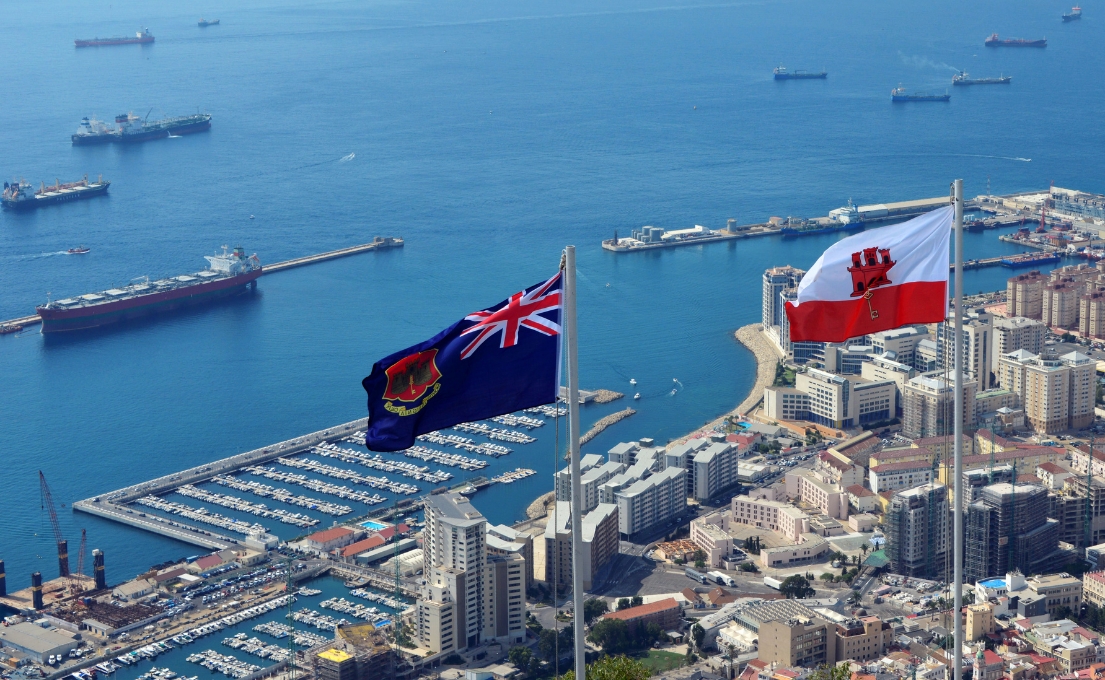
The Customs and Excise Department has published Information Notice 15/2026, dated 11 June, concerning the procedures applicable to the supply of ship and aircraft stores under the EU-UK Agreement on Gibraltar.
This Notice is particularly relevant for operators involved in customs, logistics, maritime transport, aviation supply, fuel supply, warehousing and movements of goods between the European Union and Gibraltar.
The new procedures distinguish between Union goods and non-Union goods intended for use as ship or aircraft stores, and establish the customs declarations and transit formalities required in each case.
EU-UK Agreement on Gibraltar: customs treatment of ship and aircraft stores
The Information Notice sets out the customs treatment applicable to goods intended as ship stores or aircraft stores under the framework of the EU-UK Agreement on Gibraltar.
In particular, it clarifies the procedures that must be followed depending on whether the goods have Union status or non-Union status.
This distinction is essential because it determines the type of customs declaration to be lodged, the transit procedure to be used and the formalities applicable to the entry of the goods into Gibraltar.
Union goods and non-Union goods under the EU-UK Agreement on Gibraltar
For the supply of ship and aircraft stores, the Notice differentiates between goods that are already in free circulation within the European Union and goods that do not have Union customs status.
Depending on the customs status of the goods, operators may be required to lodge export declarations, import declarations, or T1GI and T2GI transit declarations.
The correct identification of the customs status of the goods will be a key step for ensuring compliance with the applicable procedures under the EU-UK Agreement on Gibraltar.
T1GI and T2GI transit declarations for Gibraltar operations
The Notice refers to the use of T1GI and T2GI transit declarations for movements of goods linked to Gibraltar.
These transit documents will be required depending on the customs status of the goods and the type of operation being carried out.
The use of T1GI and T2GI declarations is one of the most relevant operational aspects for companies involved in the supply of ship and aircraft stores, as it affects the documentary, logistical and customs management of the movement.
Entry of goods into Gibraltar for ship and aircraft stores
Information Notice 15/2026 also defines the procedures governing the entry of goods into Gibraltar and their subsequent removal for supply purposes.
This is especially important for operators supplying vessels or aircraft, as the goods may need to be placed under specific customs procedures before being released for their intended use.
Companies should review their internal procedures to ensure that the entry, storage and removal of goods are properly documented and aligned with the new requirements.
Maritime transport from Algeciras to Gibraltar
The Notice addresses specific aspects relating to maritime transport from Algeciras to Gibraltar.
This point is particularly relevant because the EU-UK Agreement on Gibraltar includes restrictions on exports from the European Union to Gibraltar by sea.
As a result, operators carrying out maritime supply operations from Algeciras must pay close attention to the specific conditions applicable to these movements, especially when the goods are intended as ship stores.
Fuel supply under the EU-UK Agreement on Gibraltar
The Information Notice also covers certain procedures relating to the supply of fuel.
Fuel supply operations may involve additional customs and excise requirements, particularly where the goods are subject to special tax controls or are moved from excise or customs warehouses.
Operators involved in fuel supply should assess the impact of the Notice on their declarations, warehouse movements and supply documentation.
Excise warehouses and customs warehouses
The Notice includes references to the use of excise warehouses and customs warehouses in the context of ship and aircraft stores.
These facilities may play an important role in the storage and management of goods before their final supply to vessels or aircraft.
Depending on the status and nature of the goods, the applicable warehouse regime may determine the customs and tax treatment of the operation.
Re-export declarations at the DCP of La Línea
Another relevant point covered by the Notice is the lodging of re-export declarations with the Customs Processing Centre, DCP, at La Línea.
This procedure may apply to certain movements of goods linked to Gibraltar, particularly where non-Union goods are removed for supply purposes.
The correct lodging of re-export declarations will be essential to ensure traceability and compliance with customs requirements.
Cancelled vessel calls and customs declarations
Information Notice 15/2026 also explains how declarations should be handled where a vessel’s call is cancelled.
The Notice distinguishes between two situations:
- Cases where the goods have already left the customs territory of the Union.
- Cases where the goods have already been placed into storage in Gibraltar.
This distinction is important because each scenario may require a different customs treatment and specific corrective procedures.
Supply of goods to vessels at anchor
The general rules laid down in the applicable legislation continue to apply to the supply of Union and non-Union goods to vessels at anchor.
However, the restrictions established by the EU-UK Agreement on Gibraltar must also be taken into account, especially in relation to exports from the European Union to Gibraltar by sea.
This means that operators must combine the general customs rules with the specific limitations introduced by the Agreement.
Impact of the EU-UK Agreement on Gibraltar for customs operators
The procedures set out in Information Notice 15/2026 will have a direct impact on companies involved in the supply of ship and aircraft stores to Gibraltar.
Operators should review the customs status of their goods, the declarations required, the use of T1GI or T2GI transit, the role of warehouses, the treatment of fuel supplies and the procedures applicable in the event of cancelled vessel calls.
Arola’s customs department remains at the disposal of companies requiring further guidance on the application of the EU-UK Agreement on Gibraltar and its impact on ship and aircraft store operations.